Could low vitamin D really make someone feel dizzy, or is the word “dizzy” hiding a different problem? For an older adult, that distinction matters. A spinning room, a faint feeling after standing, and unsteadiness while walking can all feel alarming, but they don't point to the same cause.
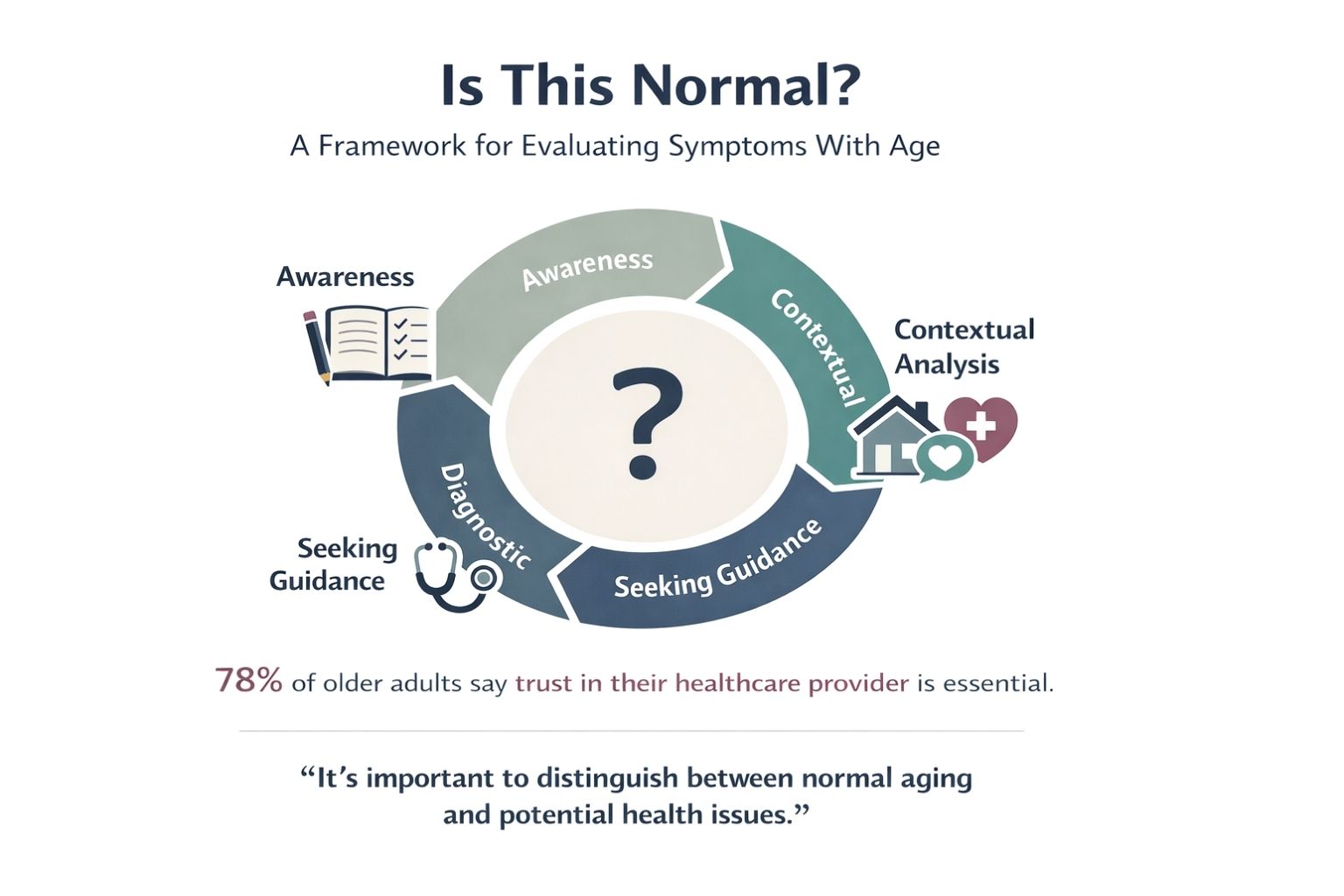
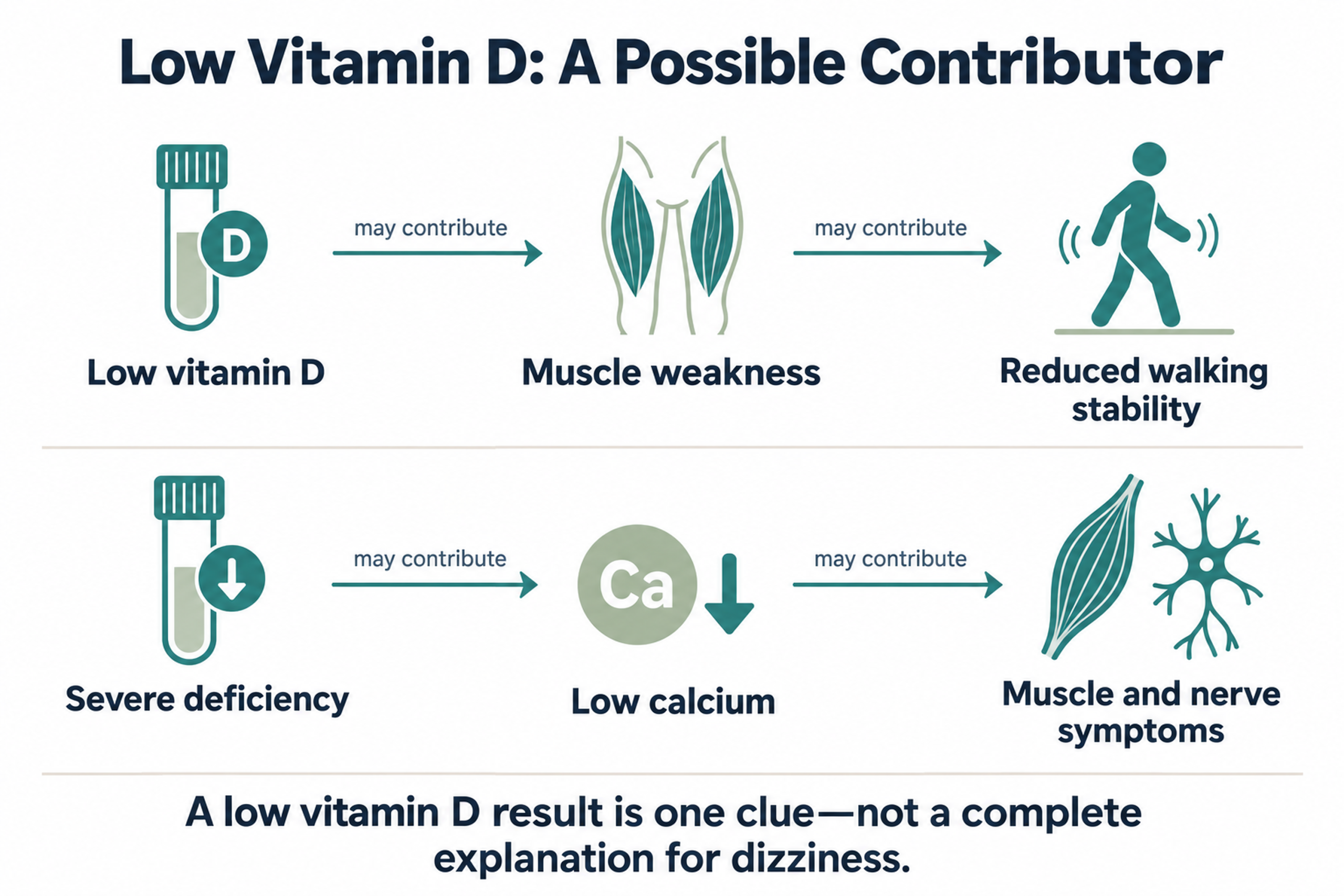
The short answer is cautious: low vitamin D isn't usually recognised as a direct, stand alone cause of dizziness. It may contribute indirectly through muscle weakness, poorer balance, falls risk, or, in more severe cases, low calcium. Persistent dizziness still needs an assessment for more common causes, including dehydration, medicines, blood pressure changes, anaemia, inner ear disorders, and heart rhythm problems. Readers who want a broader way to judge whether a symptom fits typical ageing can use this framework for evaluating symptoms with age.
What the Question Really Means
The phrase “can low vitamin D cause dizziness” contains several different questions. Someone who says “dizzy” may mean that the room is spinning, that the head feels light, that fainting seems close, or that walking feels unsafe. Those sensations overlap in everyday speech, but clinicians separate them because each suggests a different pathway.
Vertigo usually means a false sensation of movement, often spinning or turning. It can appear when the head changes position and may point towards the balance organs in the inner ear. Light headedness or presyncope feels more like weakness, floating, or nearly fainting, and may relate to dehydration, a blood pressure drop, anaemia, or a heart rhythm problem. Unsteadiness means difficulty controlling the body while standing or walking. It may be linked with weak muscles, poor vision, nerve problems, joint disease, medication effects, or vestibular disorders.
Vitamin D fits most plausibly into the unsteadiness and physical function part of this picture. UK guidance tends to discuss deficiency in relation to bone pain, muscle weakness, reduced physical function, and low calcium, rather than dizziness as a classic symptom. NHS linked clinical guidance describes the relevant pathway as deficiency contributing to hypocalcaemia or osteomalacia related weakness, which can feel like light headedness or instability.

That doesn't mean a low result should be dismissed. It means the result needs to be interpreted beside the symptom pattern. The useful questions are:
- Does the room spin, or does the person feel faint?
- Does the sensation follow standing, turning, or walking?
- Has balance worsened alongside muscle weakness?
- Are there falls, bone pain, cramps, or reduced outdoor activity?
- Could medicines, hydration, blood pressure, or the inner ear explain it more directly?
This step prevents a common mistake: treating a laboratory result as a complete diagnosis.
What the Evidence Actually Shows
The UK evidence supports a background association between low vitamin D and problems that can resemble dizziness, especially weakness, impaired balance, and falls risk. It doesn't establish that vitamin D deficiency directly causes spinning vertigo across the general population. A BMJ review of vitamin D deficiency in the UK described substantial deficiency and insufficiency across seasons and regions, while also highlighting the wider bone and muscle consequences rather than proving a direct dizziness mechanism.
The most useful laboratory marker is serum 25-hydroxyvitamin D. Clinical guidance commonly treats a level below 30 nmol/L, or 12 ng/mL, as deficient. However, an association between a low level and poor balance doesn't show that correcting the level will resolve every episode of dizziness. Older adults may have several contributors at once, and observational research can show that two features occur together without proving that one caused the other.
Randomised supplementation studies also need careful interpretation. They have produced mixed findings on fall reduction and generally haven't measured dizziness as their primary outcome. That leaves a reasonable clinical position: deficiency may increase vulnerability to weakness or imbalance, but supplementation isn't a universal treatment for vertigo.
Evidence at a Glance
| Study Type | What It Shows | Strength of Evidence |
|---|---|---|
| Population and observational studies | Low vitamin D often appears alongside weakness, balance difficulty, and falls risk | Suggests an association, not direct causation |
| Clinical guidance | Deficiency is assessed through blood testing and considered alongside muscle, bone, and calcium symptoms | Useful for practice, but doesn't prove that vitamin D causes dizziness |
| Supplementation trials | Effects on falls and balance are mixed, and dizziness is rarely the main outcome | Doesn't support vitamin D as a stand alone dizziness treatment |
| Vestibular research and clinical materials | Low vitamin D may be relevant in balance disorders such as BPPV, but causation remains unproven | Possible contributor, not a confirmed explanation |
The evidence therefore points towards indirect pathways. The next question isn't whether vitamin D is a hidden universal cause. It's whether deficiency could make balance, strength, or recovery worse in a person who already has another source of dizziness.
How Low Vitamin D Might Lead to Unsteadiness
Low vitamin D may matter because balance depends on more than the inner ear. The brain also needs reliable information from the feet, joints, muscles, eyes, and blood pressure system. If several of those systems become less dependable, a small postural change can feel like dizziness or make walking feel uncertain.
The clearest indirect pathway is muscle weakness. Weakness around the hips, thighs, and ankles can reduce gait control. An older adult may not experience spinning, but may sway when turning, need a wall for support, or feel unsteady after standing. This is why vitamin D belongs in a wider discussion of hormones and metabolism, rather than in a simple list of causes of vertigo.
A second possibility involves the balance system itself. Vitamin D participates in calcium regulation, and researchers have considered whether deficiency may influence vestibular function and the balance signals generated by the inner ear. UK facing materials discuss a possible relationship with benign paroxysmal positional vertigo, or BPPV, but they also stress that a causal link hasn't been proven. A person with positional spinning still needs assessment for a vestibular disorder rather than assuming that a supplement will correct it.
Why Calcium and Frailty Can Change the Experience
Severe deficiency can contribute to hypocalcaemia, or low blood calcium. That can cause neuromuscular irritability, cramps, twitching, weakness, and light headedness. In that situation, the symptom pathway is not “vitamin D directly causes vertigo”. It is a chain involving vitamin D, calcium balance, muscle and nerve function, and physical stability.
Deficiency can also coexist with reduced activity and frailty. Someone who spends less time outdoors may have lower vitamin D exposure, weaker muscles, slower reactions, and less confidence walking. Those factors can reinforce one another. A level below 30 nmol/L is more likely to prompt clinical attention because it represents deficiency, but even then the result explains only part of the story.
Practical rule: Low vitamin D can be a contributor to unsteadiness, but spinning, fainting, or rapidly worsening dizziness needs a separate clinical explanation until assessed.
Other Common Causes Worth Considering First
Dizziness often has a more immediate cause than vitamin D deficiency. A person who feels faint after standing may be dehydrated or experiencing orthostatic hypotension, a fall in blood pressure linked to changing position. Medicines can add to that effect, particularly blood pressure treatments, water tablets, and sedatives. These causes tend to produce light headedness or near fainting rather than a brief spinning sensation.
Inner ear conditions create a different pattern. BPPV commonly causes short bursts of spinning when someone rolls in bed, looks upwards, or turns the head. Vestibular neuritis may cause more prolonged vertigo, while Ménière's disease can combine dizziness with hearing symptoms. A positional trigger therefore points towards a balance organ assessment more strongly than towards vitamin D.
Other causes can be just as important. Anaemia may reduce energy and exercise tolerance, low blood glucose can produce shakiness and faintness, and an arrhythmia may cause sudden light headedness or collapse. Migraine and anxiety can affect balance and spatial awareness even without a typical headache. Older adults often have several of these factors together, which is why a layered assessment is safer than choosing one explanation too early.
Dizziness and Common Causes Compared
| Cause | Typical Sensation | Key Clue |
|---|---|---|
| Dehydration or postural blood pressure change | Light headedness, especially on standing | Recent illness, poor fluid intake, or symptoms after rising |
| Medication effect | Faintness, sleepiness, or imbalance | Symptoms began or worsened after a medicine change |
| BPPV | Brief spinning with head movement | Rolling over, looking up, or turning triggers symptoms |
| Anaemia or low blood glucose | Weakness, shakiness, fatigue, or faintness | Symptoms occur with exertion, missed meals, or general decline |
| Arrhythmia | Sudden light headedness or near fainting | Palpitations, irregular pulse, or episodes without warning |
| Low vitamin D | Unsteadiness linked with weakness or reduced physical function | Muscle weakness, bone symptoms, falls risk, or a confirmed low level |
Cardiovascular symptoms deserve particular attention. Heart and circulation guidance can help readers place dizziness alongside pulse changes, blood pressure concerns, and fainting rather than viewing it as an isolated vitamin problem.
Testing Your Vitamin D Level and Reading the Result
Could a blood test clarify whether vitamin D is contributing to unsteadiness? The usual test is 25-hydroxyvitamin D, also written as 25(OH)D. A low level may cause no obvious symptoms, while tiredness, weakness, and imbalance have many possible causes. The result therefore needs to be read with the person's history, examination, calcium level where appropriate, and other investigations.
UK reports commonly use these practical ranges:
- Below 30 nmol/L, 12 ng/mL: deficient.
- 30 to 50 nmol/L, 12 to 20 ng/mL: insufficient or borderline.
- 50 nmol/L and above, 20 ng/mL plus: generally adequate.
Different UK pathways use 25 nmol/L or 30 nmol/L as the deficiency cut off. The report's own reference range and the clinician's interpretation decide which applies. A result above 30 nmol/L makes vitamin D deficiency less likely to explain symptoms, but it does not prove that every episode of dizziness has another cause. Vitamin D is more likely to contribute indirectly through muscle weakness, poorer physical function, falls risk, or, in some situations, low calcium.
When Testing Makes Sense
Testing is more reasonable when unsteadiness keeps returning or has contributed to a fall, especially alongside muscle weakness, bone pain, reduced mobility, or general physical decline. It may also be relevant with limited sun exposure, darker skin, malabsorption, pregnancy, or medicines that affect vitamin D metabolism. Occasional dizziness with a clear trigger does not automatically require vitamin D testing.
Recent sun exposure and supplements can affect the reading. Absorption problems and conditions involving the liver, kidneys, or calcium regulation can also matter. One result is a clue, not a complete explanation. The clinician should ask whether the level fits the symptoms and whether another diagnosis needs quicker attention.
The appointment may include more useful checks than vitamin D alone. Depending on the description, these can include blood pressure lying and standing, a medication review, a heart rhythm check, hearing and balance assessment, and tests for anaemia or glucose problems.
Safe Ways to Restore and Maintain Levels
For prevention, UK NHS advice recommends a daily supplement containing 10 micrograms, or 400 IU, of vitamin D for adults and children over four who have limited sun exposure, dark skin, or other listed risk factors. The NHS vitamin D guidance also explains that needs vary with age, lifestyle, and health status. That daily amount is a maintenance baseline, not a treatment plan for confirmed deficiency.
Clinicians may prescribe a short course of higher dose treatment for documented deficiency. Common UK style regimens can use a cumulative loading dose around 300,000 IU over 6 to 10 weeks, followed by maintenance dosing. Other clinical plans may use roughly 50,000 IU weekly or 4,000 IU daily for 8 to 12 weeks, but these are treatment examples that require professional oversight. The general adult upper limit for self treatment is 4,000 IU, or 100 micrograms, daily, and taking more isn't a safer or faster route.
Vitamin D3 is usually preferred for routine supplementation, although both D2 and D3 can be used in appropriate circumstances. Food can support intake through oily fish, egg yolks, fortified milk and spreads, and mushrooms exposed to ultraviolet light. Sensible daylight exposure may help, but it must be balanced against skin damage. People with darker skin may need particular attention to dietary sources or supplements because limited sunlight can increase deficiency risk.
Avoiding Supplement Mistakes
Mega dosing without a test can create harm, especially when several products contain vitamin D. Excess vitamin D can raise calcium and cause nausea, thirst, frequent urination, weakness, confusion, or worsening symptoms. People with kidney disease, calcium disorders, sarcoidosis, or relevant medicines need individual advice before supplementing.
Persistent dizziness shouldn't be managed by supplements alone. Guidance on muscles, bones and joints can help place vitamin D within the wider needs of strength, mobility, nutrition, and fall prevention.
Stop self treatment and seek medical advice if dizziness continues, falls occur, confusion develops, or chest pain, palpitations, nausea, unusual thirst, or frequent urination appear.
When to Seek Help and What to Ask
Dizziness needs urgent assessment when it begins suddenly or comes with neurological symptoms, chest pain, fainting, new hearing loss, severe weakness, speech difficulty, facial drooping, or a new problem with walking. These features can indicate a neurological, cardiovascular, or ear related emergency. Vitamin D testing shouldn't delay urgent care.
A routine clinical appointment is appropriate for recurrent symptoms, unexplained imbalance, falls, muscle weakness, bone pain, or dizziness that interferes with ordinary activities. A vitamin D test is reasonable when deficiency risk is present, especially limited sun exposure, darker skin, reduced mobility, malabsorption, or a condition that affects bone and muscle health. The clinician may also prioritise blood pressure, medication, heart rhythm, blood count, glucose, calcium, or vestibular assessment.
A Useful Consultation Checklist
Before the appointment, the person or caregiver can record:
- The sensation: spinning, faintness, floating, or unsteadiness.
- The trigger: standing, turning the head, walking, exertion, meals, or no obvious trigger.
- The timing: sudden or gradual onset, brief episodes, or symptoms that persist.
- The associated signs: hearing change, headache, palpitations, weakness, cramps, nausea, or falls.
- The medicines and supplements: including recent changes and products bought without prescription.
- Recent measurements: blood pressure readings, especially if symptoms follow standing.
A useful question is not “Could vitamin D be causing this?” alone. It is, “Does the pattern fit weakness or deficiency, or does it point more strongly to blood pressure, medicines, the heart, or the inner ear?” That wording encourages a full assessment rather than a single result diagnosis.
Persistent or worsening unsteadiness deserves review even when the vitamin D result is low, borderline, or normal.
Treatment should follow the result and the clinical context. If deficiency is confirmed, restoring vitamin D may support muscle and bone health, but symptom improvement can take time and may not remove dizziness caused by BPPV, medication, anaemia, dehydration, or an arrhythmia. Readers seeking proportionate guidance about common symptoms can also explore when an age related change deserves medical attention.
Anyone experiencing recurrent dizziness, weakness, falls, or spinning should arrange a clinical assessment rather than relying on vitamin D supplements alone. Bring the symptom checklist, medication list, fall history, and any supplement details to the appointment, and use the resulting advice to decide whether vitamin D testing, treatment, or investigation of another cause is the safest next step.